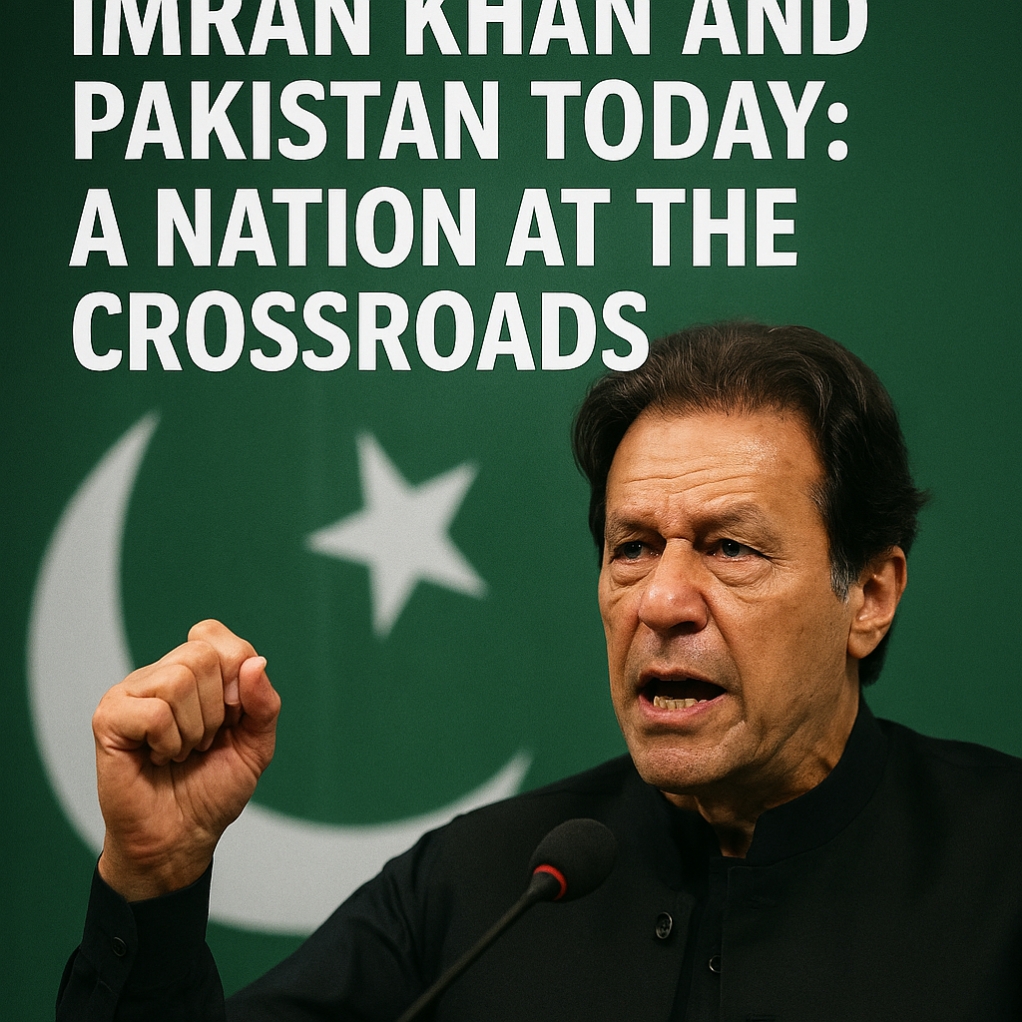
As 2025 draws to a close, Pakistan—a nation of more than 240 million people—finds itself at a defining moment in its history. At the center of this turbulence is Imran Khan, former Prime Minister and founder of the Pakistan Tehreek-e-Insaf (PTI). Once hailed as a cricketing legend and later as a populist leader promising justice and accountability, Khan now sits behind bars, serving a 17-year sentence in what his supporters denounce as a “military-style trial.” His imprisonment has not diminished his influence; instead, it has sparked widespread protests, civil unrest, and renewed debates about democracy, governance, and the military’s role in Pakistan’s political life.
This article examines Pakistan’s current trajectory through the prism of Khan’s struggle, the government’s response, and the broader implications for the country and the world.
Imran Khan’s Current Situation
- Incarceration: Since August 2023, Khan has been confined to Rawalpindi’s Adiala Jail. Despite repeated appeals, he remains imprisoned, with family visits suspended until February 2026. His sister has noted that while his physical health is stable, prolonged isolation has taken a toll on his mental well-being.
- Legal Battles: Convictions in corruption cases, including the Toshakhana verdict, have been sharply criticized by PTI as politically motivated. Khan himself has claimed that judgments are “pre-written and merely read out.”
- Political Messaging: Even from prison, Khan continues to send directives through his lawyers and party channels, urging supporters to resist what he calls “Asim Law”—a reference to the military-backed governance under Army Chief General Asim Munir.
Pakistan’s Political Climate
- Civil Unrest: In recent weeks, more than 1,000 PTI supporters have been detained across Punjab and other provinces. Heavy police deployments in Rawalpindi and major cities reflect the government’s determination to suppress dissent.
- Nationwide Shutdowns: PTI has organized coordinated street protests and shutdowns, framing them as constitutional efforts to secure Khan’s release.
- Military’s Role: The military continues to dominate Pakistan’s political landscape. Many analysts argue that Khan’s downfall is directly linked to his challenge to entrenched military authority.
The People’s Response
Imran Khan’s popularity remains resilient, particularly among the youth and middle class, who see him as a symbol of justice and sovereignty.
- Supporters’ Sentiment: For many, Khan is a victim of political engineering, and his imprisonment represents resistance against authoritarianism.
- Opposition’s View: Critics contend that Khan’s confrontational style and inability to stabilize the economy during his tenure contributed to Pakistan’s current crises.
- Global Attention: International observers, including UN rapporteurs, have expressed concern over Khan’s prison conditions, warning they may amount to inhuman or degrading treatment.
Pakistan’s Challenges Beyond Khan
While Khan’s saga dominates headlines, Pakistan faces deeper structural challenges:
- Economic Struggles: Inflation, unemployment, and dependence on IMF bailouts continue to weigh heavily on citizens.
- Governance Issues: Political instability has weakened institutions, making long-term reforms elusive.
- Civil Liberties: Crackdowns on media, protests, and opposition figures raise fears of democratic erosion.
- Regional Dynamics: Relations with India, Afghanistan, and China remain fraught, balancing security concerns with trade opportunities.
Global Implications
Pakistan’s turmoil reverberates far beyond its borders.
- Geopolitical Importance: As a nuclear-armed state bordering India, China, and Afghanistan, Pakistan’s stability is vital for regional peace.
- Diaspora Concerns: Millions of Pakistanis abroad closely monitor developments, shaping global perceptions and influencing remittance flows.
- Democracy Debate: Khan’s imprisonment underscores questions about the resilience of democratic institutions in South Asia, offering the world a case study in the interplay of populism, military influence, and fragile economies.
Looking Ahead
The months ahead will be pivotal:
- Legal Appeals: Khan’s lawyers continue to contest his convictions, though outcomes remain uncertain.
- Public Mobilization: PTI’s capacity to sustain nationwide protests will test both government tolerance and public endurance.
- Institutional Balance: Pakistan’s future hinges on whether civilian authority can be recalibrated against military dominance.
- International Pressure: Calls for fair treatment of Khan and democratic reforms may grow louder, though sovereignty concerns often blunt external influence.
Conclusion
Imran Khan’s story is not merely about a former Prime Minister in prison—it is about Pakistan itself. A nation wrestling with questions of democracy, justice, and identity. For the global community, Pakistan today serves as a reminder of how fragile democratic systems can be when confronted with entrenched power structures and economic instability.
At its core, Pakistan stands at a crossroads: between authoritarian control and democratic resilience, between despair and hope. The fate of Imran Khan may well determine which path the nation chooses.